

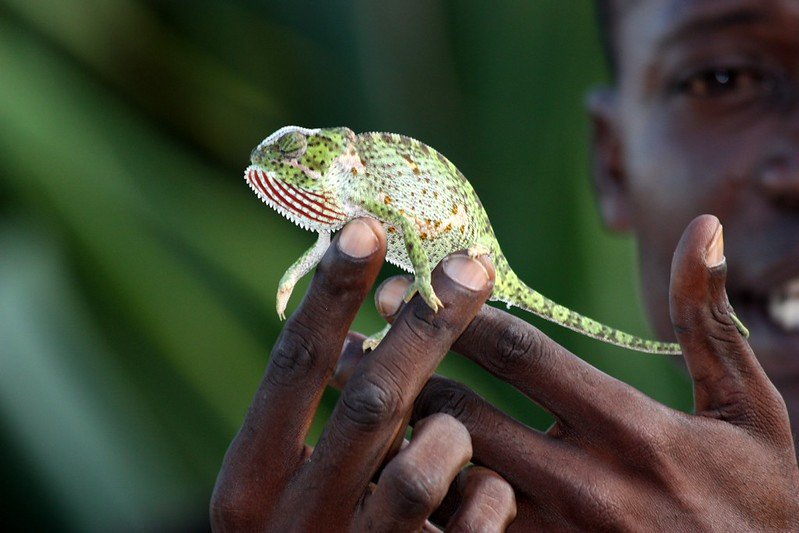
For too long, Africa has been explained to the world by people standing outside it, and the outcome has led to Africa being seen as a continent flattened into crisis, conflict, and deficit, while its complexity, creativity, and agency are pushed to the margins.
But the question is no longer whether Africa has a story. The real question is: who has the power to shape it, frame it, and benefit from it?
Africa’s narrative is a question of ownership. When the dominant stories about a place are told by others, they often reflect outsiders’ assumptions, priorities, and blind spots.
Research from the Global Media Index for Africa shows that leading global outlets still leave room for improvement in how they cover the continent, especially in source diversity, geographic depth, and the inclusion of ordinary African voices.
Furthermore, research by Africa No Filter reveals that Africa could be losing up to $4.2 billion annually in inflated interest payments due to biased media coverage.
Every story about Africa carries consequences. Media narratives influence how investors assess risk, how tourists imagine destinations, how policymakers design interventions, and how young Africans see themselves.
Africa, like every region, has conflict, inequality, and governance challenges, so the problem is not that difficult stories should be hidden. The problem is imbalance, because when crisis becomes the default lens, it crowds out stories of innovation, public leadership, scientific progress, cultural excellence, and everyday resilience.
Africans as authors
Irrespective of what has been, the narrative has begun to shift across the continent and in the diaspora as Africans are no longer waiting for permission to define themselves. They are building the platforms, producing the stories, and asserting authorship over the African experience.
Africans have begun claiming the right to define themselves. African journalists, filmmakers, writers, entrepreneurs, scholars, and artists are building platforms that challenge inherited frames and offer richer, more local perspectives. This shift matters because lived experience is a source of authority.
Journalists and editors such as Yinka Adegoke, through platforms like Semafor Africa, are helping to reshape how Africa is covered and discussed in global media spaces. Initiatives like Africa No Filter are also deliberately challenging stereotypical storytelling and amplifying stories of progress, innovation, and possibility.
Furthermore, African-led media efforts like reporting and media training initiatives centred on African journalists are helping improve coverage standards and shift the focus toward stories rooted in local knowledge rather than external assumptions. According to the United Nations Development Programme (UNDP), across West Africa, local media and journalists are playing a transformative role in reshaping public discourse.
When Africans tell their own stories, they do more than correct misinformation; they expand the possible image of Africa itself. They show a continent that is not waiting to be discovered, but is actively creating, debating, inventing, and imagining its future which makes this kind of storytelling a strategic work.
Narrative ownership matters
For Africa, owning the narrative is no longer optional but more strategic. The way a continent is described shapes the way it is treated, and for too long Africa has been framed through external assumptions that obscure its complexity and potential.
When Africans tell their own stories, they do more than correct misinformation; they set the terms of engagement, they decide what is amplified, what is contextualised, and what future is made visible.
Narrative ownership is therefore a matter of influence, dignity, and economic advantage.
Who tells the story affects whose interests are centred. External storytelling has often privileged foreign experts, international institutions, and elite voices, while ordinary citizens, young people, women, and marginalised communities remain under-represented. That imbalance distorts the record and narrows the policy imagination.
Narrative ownership also has economic consequences. As public discourse shifts, so do investment perceptions, tourism interest, diaspora engagement, and market confidence. This is why African-led media initiatives and African storytelling ecosystems are infrastructure for influence, dignity, and long-term competitiveness.
The role of African voices
If Africa is to be understood properly, Africans must be central to the telling; that means more African editors, publishers, filmmakers, researchers, creators, and civic leaders setting the agenda and framing the interpretation. It means elevating lived experience as expertise, not treating African voices as decorative additions to someone else’s analysis.
It also means making room for the many Africans already doing the work. From newsroom leaders like Yinka Adegoke to African-led narrative organisations and digital storytellers reclaiming their platforms, the continent is full of people rewriting the script in real time. Their work shows that Africa’s story is not a single story. It is a chorus, and it is increasingly being led by Africans themselves.
The future of Africa’s story should not be outsourced; it should be authored by Africans, in our languages, through our institutions, across our creative industries, and in conversation with the world on our own terms. The goal is not to silence external voices, but to rebalance power so that African voices are no longer treated as supplementary to the story.
Africa does not need a rescue narrative, it needs narrative justice; and narrative justice begins when Africans are not merely subjects of storytelling, but the primary storytellers of their own continent.
Photo source: Daniela Hartmann/Flickr