

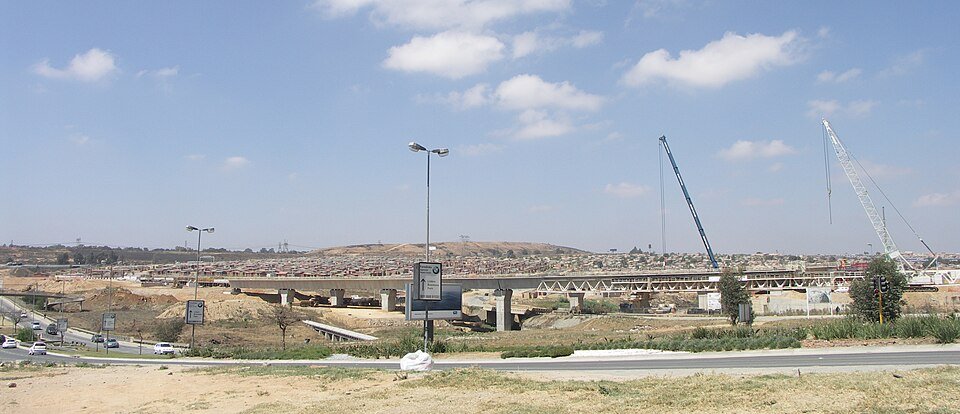
Africa has an infrastructure challenge that is closely tied to leadership and institutional capacity problems that often determine whether infrastructure delivers the development outcomes citizens need.
The continent faces a huge infrastructure deficit. The African Development Bank (AfDB) estimates that Africa needs between $130 billion and $170 billion annually for infrastructure, with a financing gap of up to $108 billion a year. Closing that gap is essential, but mobilising more capital will not, by itself, guarantee better roads, reliable electricity, efficient ports or functioning water systems.
The harder question then would be, 'Who will decide where that money goes, how projects are selected, how contracts are awarded, how construction is monitored, and what happens when political priorities change?'
This is why Africa’s next infrastructure investments should come with an equally serious investment in the people and institutions responsible for delivering them, because without capable leadership, strong public institutions and accountable decision-making, even well-financed infrastructure can fail to produce lasting development.
A new highway can be photographed, but a procurement system that prevents waste cannot. A power plant can be inaugurated, but the institutional discipline required to maintain it for 30 years is less visible. Yet leadership would determine whether infrastructure becomes a productive asset or another expensive public project.
The question for governments and development partners, then, is how to make every infrastructure dollar work harder. Three changes would help.
First, put institutional capacity into the design of infrastructure projects, not at the end of them. Infrastructure projects are often assessed through financial, technical and environmental lenses. Governance capacity should receive the same attention.
Before a major road, railway or power project is approved, governments and development financiers should ask whether the institutions responsible for procurement, regulation, maintenance and service delivery have the capacity to manage what is being built.
The World Bank’s 2023 Infrastructure Governance Assessment Framework makes a similar case. It examines infrastructure across its entire lifecycle, from project selection and design through procurement and implementation, while also looking at transparency, integrity, regulation, competition and the governance of state-owned enterprises.
This matters because infrastructure losses are not always caused by a lack of money. The World Bank notes that, on average, countries lose roughly one-third of infrastructure spending through inefficiencies, with losses exceeding 50% in some low-income countries as reported by the International Monetary Fund (IMF).
Development finance should therefore support the institutions around a project as deliberately as it supports the project itself. That could mean strengthening procurement agencies, regulators and municipal authorities before construction begins, rather than bringing in capacity-building programmes once problems have already emerged.
Second, make leadership development part of development finance.
Leadership development is often treated as a separate activity: a fellowship here, a public-sector training programme there. It should be much more closely connected to the development projects countries are trying to deliver.
For instance, the success of a large transport corridor depends on engineers and construction companies, but it also depends on customs officials, transport regulators, local authorities, trade negotiators and policymakers. The same is true of an energy project, a digital public infrastructure programme or a health system reform.
Development institutions could therefore build leadership components into major investments. Young public servants could be attached to infrastructure programmes and exposed to project finance, procurement, regulation and stakeholder management. Government officials could receive practical training in managing infrastructure assets. Future leaders could work across government, business and civil society rather than developing expertise in isolated institutional silos.
This is a longer-term investment, but Africa's development challenges are increasingly complex and interconnected; hence, the continent needs people who can work across those boundaries.
The case for investing in people is already well established. The World Bank's Africa Human Capital Plan identifies health, knowledge, skills and resilience as central to the region's economic potential. Its research has also found that human-capital deficits directly affect productivity. Leadership is one part of that human-capital equation that deserves more attention.
Third, measure institutions by what they are able to deliver, not simply by whether reforms have been introduced.
Africa has no shortage of strategies, policies and institutions on paper. The more useful question is whether they work.
This requires development partners and governments to look beyond the completion of a project or the adoption of a policy. Did the road reduce travel time? Did the port make trade faster? Did electricity become more reliable? Can the responsible agency maintain the asset? Has the regulatory institution become more effective?
The World Bank's latest CPIA Africa assessment offers a useful warning. In its assessment of 2024, the Bank found no change in the average scores for quality of public administration across the countries covered in its Africa sample. Its measure of transparency, accountability and corruption also recorded more declines than improvements, and remained the lowest-scoring criterion among the 16 assessed.
Those findings suggest that institutional reform cannot be treated as a box to tick alongside physical development.
For international development organisations, this should also change how partnerships are structured. Technical assistance should leave behind stronger local capability rather than permanent dependence on external expertise. Project teams should include local institutions from the beginning. Leadership programmes should be connected to real policy and development challenges rather than existing as stand-alone workshops.
For African governments, the implication is equally practical. Infrastructure plans should identify the institutional capabilities required to deliver them and invest in those capabilities alongside construction. Recruitment, professional development and succession planning within the public sector should be treated as part of development planning.
Furthermore, for African businesses and philanthropies, there is an opportunity to invest in leadership beyond the usual executive-development model. Fellowships, apprenticeships, policy labs and cross-sector programmes can give emerging leaders the experience required to understand how decisions are made and how institutions can be improved.
None of this reduces the case for infrastructure. Africa needs substantially more infrastructure. The AfDB estimates that the continent's infrastructure requirements are particularly significant as urbanisation accelerates, with Africa's urban population expected to reach about 1.5 billion by 2050.
But building faster without building institutional capacity risks creating assets that are poorly managed, underused or difficult to sustain.
The development sector should therefore rethink what counts as infrastructure investment. A functioning regulator, a competent civil service, an effective local government and a generation of leaders capable of managing complex public-private partnerships may not produce an impressive photograph at an inauguration. Their value becomes apparent years later, when the road still works, the power system is still managed effectively and public institutions continue delivering after political leadership changes.
Africa's infrastructure challenge is therefore also a leadership challenge.
The practical response would be to build institutional capacity into infrastructure projects, connect leadership development to real development work, and measure success by the strength of the institutions left behind.
If Africa is going to invest hundreds of billions of dollars in its physical future, it should invest seriously in the people who will have to govern, maintain and build on that future.
Photo source: NJR ZA
