

Africa has spent decades talking about regional integration, but it has not yet become a practical economic priority.
The numbers explain why. Intra-African trade has remained stubbornly low, accounting for roughly 14% to 16% of the continent’s trade in recent years. The African Development Bank (AfDB) data shows that in 2024, only 15.1% of Africa’s total trade took place within the continent, compared with 68% in Europe, and 59% in Asia.
According to data from the United Nations Conference on Trade and Development (UNCTAD), by comparison, 67% of Europe’s exports stayed within Europe in 2025, while 63% of Asia’s exports were traded within the region. Africa continues to do much of its business with markets outside the continent, even though it has a population of more than 1.4 billion and an expanding consumer base.
This data should concern African governments, businesses and development institutions. A continent cannot fully benefit from its economic potential while moving raw materials out of Africa and importing a significant share of the goods, machinery and processed products it consumes.
Fortunately, the African Continental Free Trade Area (AfCFTA) offers an opportunity to change that pattern, but agreements alone do not move goods across borders. For intra-African trade to grow, political commitments now have to translate into simpler rules, better infrastructure, stronger regional value chains and easier access to finance.
Three areas deserve immediate attention.
1. Make it easier for African businesses to trade with one another
For many businesses, the biggest obstacle to trading across Africa is not the absence of a continental trade agreement, but what happens at the border.
Different product standards, lengthy customs procedures, duplicated testing, inconsistent regulations and other non-tariff barriers can make selling goods to a neighbouring African country more difficult and expensive than exporting outside the continent.
TradeMark Africa, in its report “African Entrepreneurs Confront Rising Non-Tariff Trade Barriers” reported in 2026 that non-tariff measures have become a major obstacle for African businesses, citing fragmented standards, slow testing regimes, unrecognised certificates and procedural disputes as barriers that can keep firms out of regional markets.
This is where governments need to focus their attention.
Reducing tariffs matters, but an entrepreneur does not experience regional integration through a policy document. They experience it through the time it takes to clear goods, the cost of complying with regulations and the certainty that a shipment will arrive when expected.
African governments and regional economic communities should therefore accelerate the harmonisation of standards, expand electronic customs systems and strengthen mechanisms for identifying and resolving non-tariff barriers.
There are already examples of what practical reforms can achieve. TradeMark Africa's one-stop border post model has helped reduce the time required to cross some borders by allowing exit and entry procedures to be completed in a single location. At the Kobero border between Burundi and Tanzania, the crossing time reportedly fell from up to two days to one or two hours after the introduction of a one-stop border system.
Africa needs more of this kind of problem-solving.
2. Build regional value chains, not just bigger export markets
The strongest argument for intra-African trade is not simply that African countries should buy more from one another. The bigger opportunity lies in what African businesses can produce together.
UN Trade and Development has found that intra-African trade contains a higher share of processed and semi-processed goods than Africa's exports to the rest of the world. In one of its assessments, processed and semi-processed goods accounted for 61% of intra-African exports. This suggests that regional trade can provide a stronger foundation for industrialisation and value addition.
This is important because few African countries can build competitive industries entirely on their own. For example, a pharmaceutical industry may require ingredients from several countries, financing from another and a market large enough to justify investment. The same applies to food processing, textiles, electric vehicles, digital services and renewable energy technologies.
The AfCFTA can help create the scale these industries need, but governments must connect trade policy with industrial policy. That means identifying sectors where regional production is realistic and then addressing the constraints holding those sectors back. Countries should be asking where they fit into continental value chains, rather than attempting to produce everything domestically.
It also means bringing small and medium-sized enterprises into the picture. SMEs provide an estimated 80% of employment across Africa, according to UNCTAD, yet many lack the financing, market information and logistical support required to participate in cross-border trade. If intra-African trade is going to become a serious engine of job creation, smaller businesses cannot remain on the margins.
3. Treat trade infrastructure and trade finance as part of the same agenda
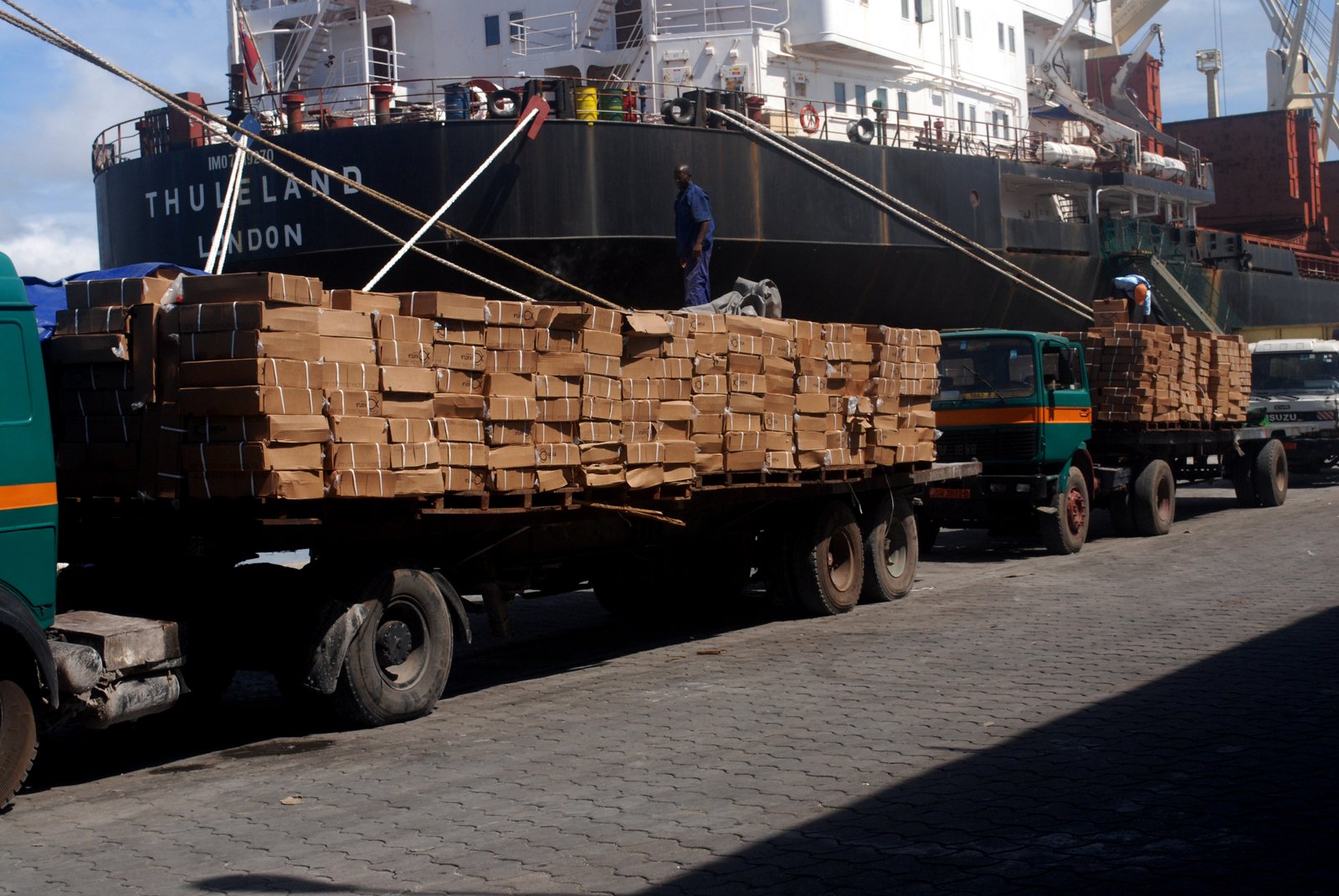
A free trade area cannot function efficiently if goods cannot move.
Roads, railways, ports, border facilities and digital infrastructure all shape the cost of doing business across Africa. The African Development Bank's recent report on regional integration points to persistent weaknesses in trade facilitation, logistics and market connectivity, which continue to limit intra-African trade.
Infrastructure investment should therefore be planned around economic corridors and production networks, rather than national boundaries alone.
The same thinking applies to finance.
The AfDB estimates that unmet demand for trade finance in Africa ranged from $74 billion to $92 billion in 2024. Foreign exchange shortages were also identified as a major constraint on banks seeking to expand trade finance.
For a small manufacturer trying to export to another African market, these are not technical issues. Without letters of credit, working capital or reliable payment systems, a viable trade opportunity may never get off the ground.
This is where institutions such as the African Export-Import Bank (Afreximbank), commercial banks and development finance institutions have an important role to play. Trade finance products need to reach beyond large corporations and support the smaller businesses that could form the backbone of regional supply chains.
The good news is that there is already momentum. Between 2020 and 2024, intra-African trade accounted for 34% of bank-intermediated trade, according to the AfDB, representing an 89% increase from the pre-pandemic period.
This shows that the demand is there, but the systems supporting it need to catch up.
Turning commitment into action
The case for intra-African trade has been made repeatedly. What Africa needs now is greater discipline around implementation.
The African Union and the AfCFTA Secretariat should continue pushing member states to move from commitments to practical reforms, particularly on tariff schedules, rules of origin and non-tariff barriers. The AfDB and Africa50 should keep aligning infrastructure investment with the trade corridors and logistics systems that can connect African markets. A partnership announced by these institutions and the AfCFTA Secretariat in 2025 is already focused on transport corridors, cross-border infrastructure, logistics hubs and digital trade systems.
National governments also have work to do. Trade ministries cannot carry this agenda alone. Finance ministries, customs authorities, infrastructure agencies, central banks and standards bodies all influence whether trade actually happens.
Business leaders should be equally involved. The AfCFTA will only succeed if African companies see neighbouring markets as part of their growth strategy and begin building supply chains accordingly.
Intra-African trade should no longer sit comfortably in the category of continental aspiration.
Chairperson Mahmoud Ali Youssouf and the African Union Commission, Secretary-General Wamkele Mene and the AfCFTA Secretariat, President Sidi Ould Tah and the African Development Bank, President Benedict Oramah and Afreximbank, alongside African heads of state and regional economic communities, all have a role in making implementation more accountable and measurable.
The question has moved from whether Africa needs deeper economic integration to whether African institutions and leaders are prepared to remove the practical barriers that still make it easier, in many cases, for African businesses to trade beyond the continent than across the border.
Photo source: Happiraphael
